All Categories
Featured
How to Design Topical Maps Automatically With AI
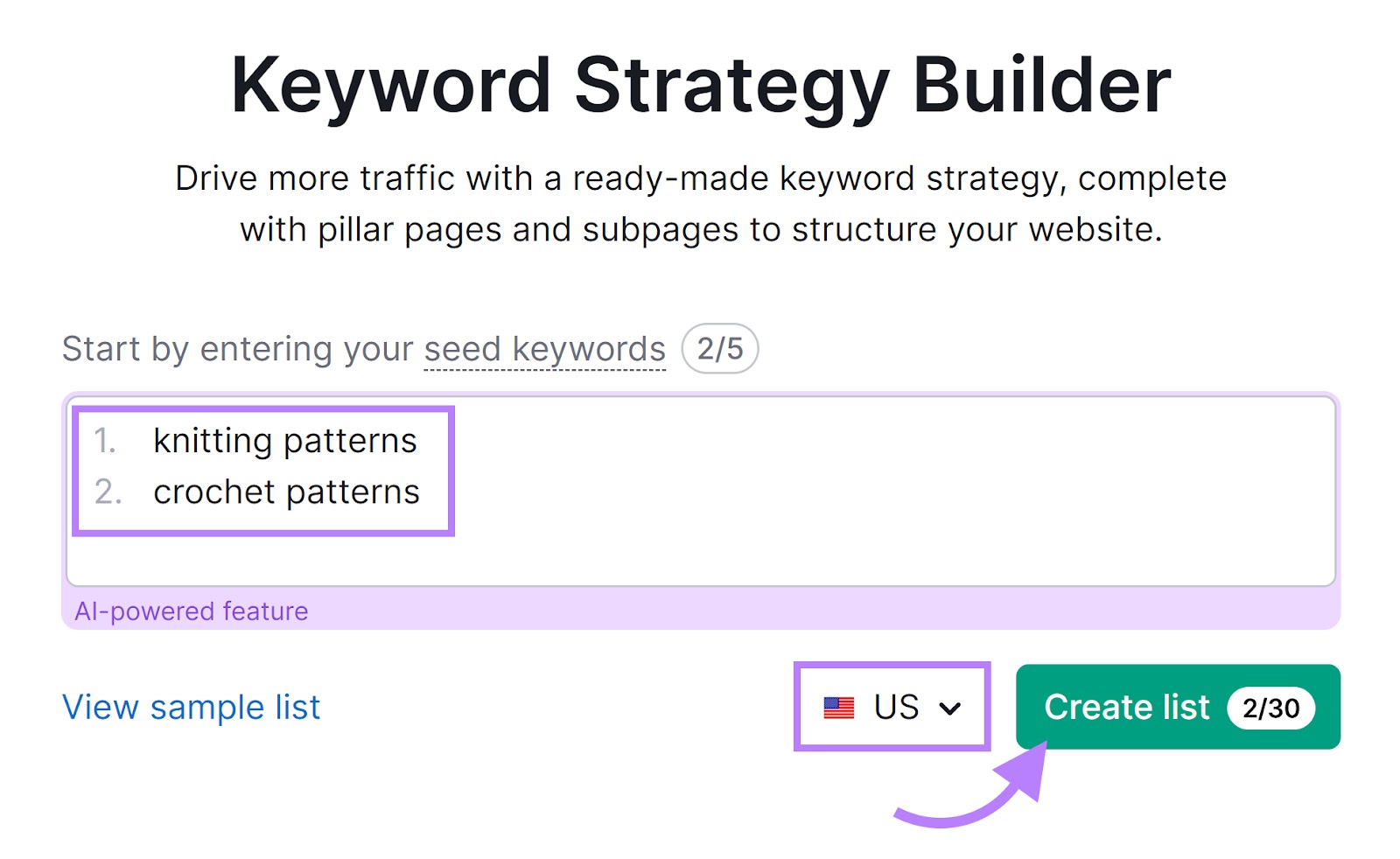
Due to the fact that it lets you offer something your competitors can't match. Like this case study: It assists a broad audience of digital marketing agencies by offering insight into the tools and methods they can utilize to increase mobile natural traffic. And nobody else can tell this story. Contrary takes on your industry's hot subjects Interviews with topic experts Often asked concerns (FAQs)that others stop working to respond to Original researchTo guarantee your material resonates with possible consumers, research the concerns they may be asking.AlsoAsked is a simple tool for getting quick concepts. Enter a term or concern, choose your region, and hit"."You'll see a tree diagram including concerns that Google users who browsed your subject also asked: Click on any of these to explore further follow-up concerns and utilize the most appropriate ones to motivate your content.: Here are some tools that can assist you assess your site's reliability and proficiency in a topic location: Semrush's Topical Authority metric can help you determine how reliability your website has for particular search terms. Here's how: Believe of a keyword that you want your website to rank for and type it into the text bar. Next, add your domain in the "AI-powered function "bar, select your target location, and click"." There will be a rating of"Low,"" Moderate, ""Appropriate, "or" High"under the "Topical Authority"label. Getting backlinks reveals rely on your website is growing. Track yours utilizing Semrush Backlinks tool. Type your site's URL into the Backlinks tool. Then, hit"."Near the top of the page, you'll see"Referring Domains"( the number of domains that point back to your site)and"Backlinks" (the overall number of backlinks indicating your website ). You'll see in red or green whether each figure has increased or decreased. Examine the report's Authority Score for a general measure of your website's quality, which is partly based upon a variety of backlink-related factors.
[target2:anchor_exact1]You can likewise examine domain authority with our free website authority checker. The complete Backlinks report also contains a wealth of helpful data, like: "": The primary topic locations of the websites connecting to yours." ": The leading anchor text of your backlinks. Google utilizes anchor text to understand what your web pages have to do with."": The distribution of your referring domains by Authority Ratings. Backlinks from more authoritative sites are generally better ."": How backlink appears on the page(image, text, and so on). Text backlinks are generally better for SEO. Monitor your positions for target keywords. If you're getting presence for a few associated terms, it might be an indication you're building trust around that subject. Semrush's Position Tracking tool makes tracking your ranking positions for keywords simple. Enter your domain and click"." Next, configure your settings. Include the online search engine, device, place, and language that you wish to track positions for. They need to include the search terms that you wish to build topical authority around. And click"."Select whether you desire to receive weekly email updates on your keyword positions. Click "."After opening the report, you'll land on the"Landscape" tab.
Scroll down to see the top-performing keywords for your domain and keywords for which your domain's exposure has actually increased ("Positive Effect ")and decreased(" Negative Impact") in the picked duration. To see whether you're developing topical authority. Compare your ranking positions before and after the content was released. You can change your selected period using the button at the top right of the report.
Why Machine Learning Drives Modern Search Algorithms
If you see favorable increases in ranking positions, you're most likely structure topical authority in those topic locations. Focus on building topical authority with your material to construct unstoppable.
momentum. Google works by determining and classifying entities, so if your (individual) brand name is classified in an appropriate classification, you're one action more detailed to ending up being a topical authority.
There are also good reasons that Google looks at the content and authorship when determining topical authority: Topical authority is not a brand-new principle. It's comprised of one or more authority signature entries. The patent keeps in mind that the objective is "to identify users with competence in certain subjects." The patent likewise explores the possibility of how a series of files can contribute to the" Authority Signature Value"of their author. The authority signature worth accumulates the author's weighted authorship on a subject across several files they have authored. It's still exposing to know that Google has been offering this "authorship "information quite some thought for a long period of time. Searching Google will help you understand topical authority even much better. From Understanding Panels to extra areas like"Articles"and "About, "you'll have a better idea of topical authority with the results appearing for top quality searches: Google's brand-driven image search is likewise helpful in understanding how Google categorizes any brand name: Now, let's get to some actionable pointers here( I hope you got down here to discover it, however all the dull things above is necessary to comprehend what we require to do to develop topical authority). Enough for you to have time and resources to format it well, surface it efficientlyon your website, and market it successfully to get other essential signals(like links and engagements). This sounds old, but it stays essential. From whatever I mentioned above, it's obvious that Google appoints topical authority based upon the authoritativeness of the resource. Do not make it about quantity. Concentrate on widely known authoritative resources. If Google comprehends something well it's entities and how these are connected. Being pointed out by other entities means ending up being part of Google's Understanding base, that is, its map of the world. But this isn't an easy procedure. You'll need to take a couple of actions, consisting of: Get chosen and win industry awards. Write for widely known industry publications(this is what I am doing here, for example )Take part in interviews(appearing in podcasts is also terrific ). Get popular publications to cite your material (invest in high-quality journalistic outreach ). Enter into expert organizations(and mention that on your website ). Whatever you do will eventually-straight or indirectly -help you develop yourself as a topical authority. All of these will contribute to your ending up being an entity, one step at a time. Schema assists Google connect all the dots. Google supports just a couple of schema types but it mentions often times:"Exceed those."Usage Schema to connect to your authorities channels, markup your authorship, and include your areas of knowledge. Start by setting up a to tell Google a little bit more about your brand name and expertise.

Latest Posts

Top-Tier Optimization Platforms for 2026
Leveraging AI for Topical Authority in the US
Machine Learning Influence On 2026 Ranking Systems